Discovering Oudry's 18th-Century Still Life: A Deeper Look at the Leg of Lamb
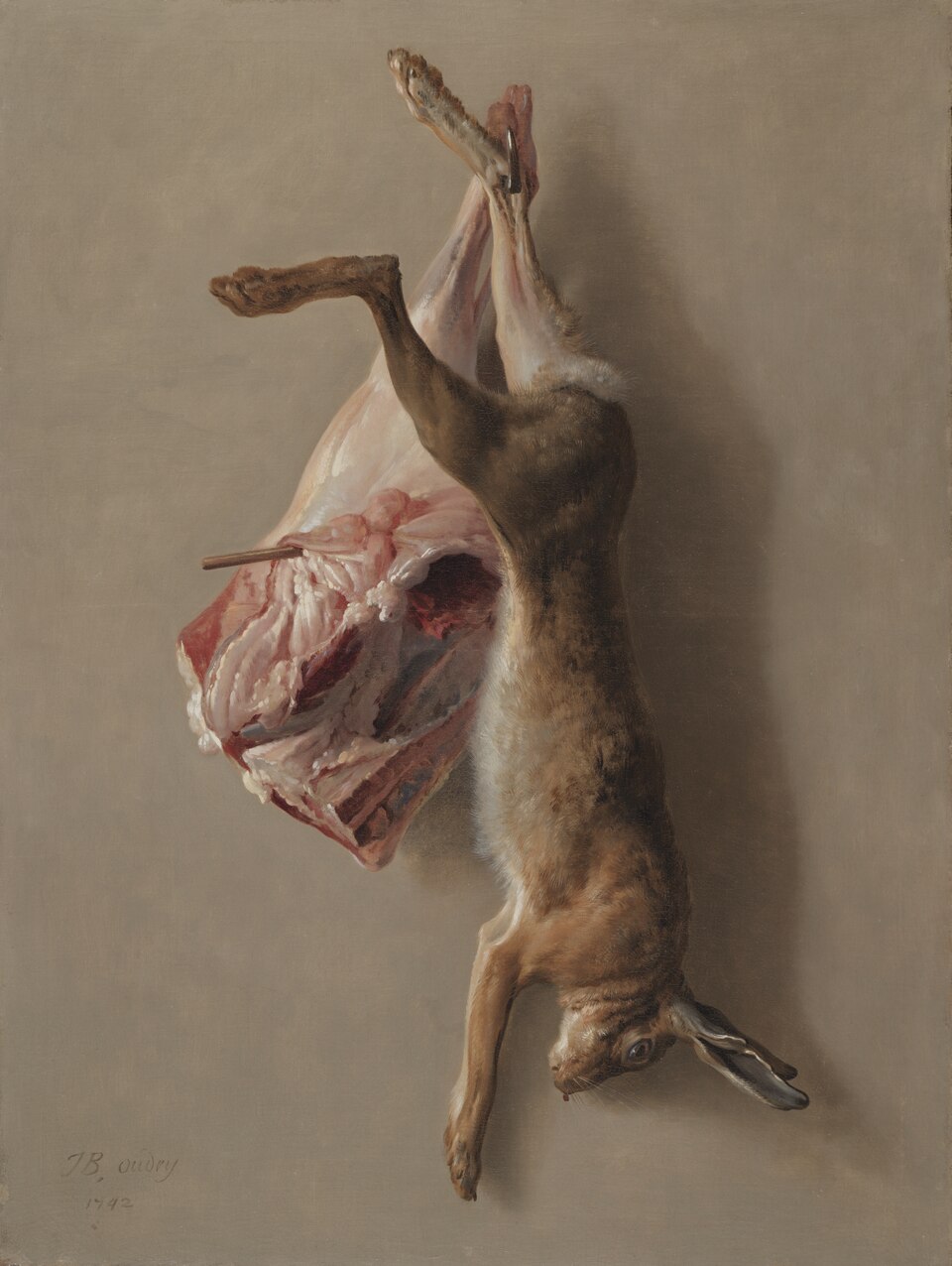
Step into Gallery 216B of the esteemed Cleveland Museum of Art, and you'll find yourself transported to 18th-century France, where artistry and realism converge in striking fashion. Among its treasures hangs a masterpiece by Jean-Baptiste Oudry (1686–1755), a leading French Rococo painter renowned for his exceptional animal and still-life compositions. Titled A Hare and a Leg of Lamb, this 1742 oil on canvas not only showcases Oudry's technical brilliance but also offers a fascinating glimpse into the social and artistic values of his era, with its detailed depiction of a raw leg of lamb taking center stage in a surprising narrative of abundance and illusion.
More than just a mere depiction of game, this painting, measuring 98.2 x 73.5 cm unframed, is a testament to Oudry's mastery of the trompe-l'œil technique. It invites viewers to pause, to look closer, and to appreciate the intricate details that transform a simple still life into a profound statement. As we explore this captivating work, we'll uncover the layers of artistry, history, and symbolism embedded within, particularly focusing on how the seemingly humble subject of a leg of lamb becomes a focal point of discussion and admiration.
Unveiling Oudry's Artistic Genius: A Close Look at the Leg of Lamb
Jean-Baptiste Oudry carved out a significant niche in 18th-century French art, becoming synonymous with the elevated art of still life. His unique style blended the elegant decorative flourishes of the Rococo movement with an almost scientific precision in naturalistic representation. A Hare and a Leg of Lamb stands as a prime example of this synthesis, employing a starkly simple composition against a sterile background to draw the viewer's entire attention to the subjects themselves: a dead hare and a precisely rendered, skinned leg of lamb, both depicted as if nailed to a rustic wall.
The painting is signed lower left: "J.B. Oudry / 1742," a mark of confidence from an artist at the height of his powers. What truly captivates, however, is Oudry's unparalleled ability to render textures. The soft, matted fur of the hare contrasts dramatically with the glistening, raw flesh of the leg of lamb. Every sinew, every subtle discoloration, every delicate curve of bone is meticulously observed and recreated with breathtaking accuracy. This skill was not merely a stylistic preference; it was highly valued among still-life artists during the Enlightenment era, which emphasized scientific accuracy and observation. Oudry's brushstrokes don't just mimic reality; they almost invite you to touch, to feel the varying surfaces, blurring the lines between art and reality. The vividness of the leg of lamb, in particular, showcases his command over color and light, making it appear startlingly fresh and tangible, a masterclass in realistic depiction.
More Than Just a Still Life: Symbolism and Context of the Leg of Lamb
To fully appreciate A Hare and a Leg of Lamb, one must understand its historical context. Created in 1742, just a year after a severe famine had ravaged France, the painting serves as a lavish celebration of game and abundance. In a period marked by scarcity and hardship for many, Oudry’s work offered a stark contrast, presenting a vision of plenty and the rewards of a successful hunt. This wasn't merely decorative; it was a powerful statement intended for display in specific environments, typically hunting lodges or opulent dining rooms of the aristocracy.
In such settings, the painting glorified the hunt and the bounty it provided. The presence of the succulent leg of lamb, alongside the game hare, spoke volumes about the owner's status, wealth, and connection to nature's generosity. It evoked an idealized world of plentiful resources, a stark psychological counterpoint to the recent memory of famine. The contrast between the painting's message and the period's reality adds a layer of poignant complexity to the work, turning it into more than just a depiction of food; it becomes a symbol of prosperity and the power to overcome scarcity. For a deeper dive into this fascinating historical backdrop, consider reading Oudry's A Hare and a Leg of Lamb: Art, Abundance, and Famine.
The choice of a leg of lamb as a central subject is also intriguing. Lamb, historically, was a prized meat, signifying celebration and offering. Its inclusion here elevates the painting from a simple genre scene to a declaration of a plentiful larder, a visible assurance of sustained sustenance in a world where such guarantees were not universally held. It speaks to a desire for comfort, stability, and the simple pleasures of a well-provisioned table, making the raw meat an unexpectedly comforting image for its original audience.
The Trompe-l'œil Technique and the Lifelike Leg of Lamb
One of Oudry's most celebrated skills, vividly showcased in A Hare and a Leg of Lamb, is his mastery of trompe-l'œil, a French term meaning "deceive the eye." This artistic technique creates the illusion that depicted objects exist in three dimensions, making them appear startlingly real. In this painting, Oudry achieves a remarkable sense of depth and tangible presence.
The dead hare and the skinned leg of lamb are not merely painted on a canvas; they appear to protrude from it, seemingly fastened to the flat background wall by unseen nails. Oudry's genius lies in his meticulous observation of how light interacts with form and texture. He employs subtle gradations of shadow and highlights to give volume to the hanging forms, making the folds of the hare's fur and the glistening surface of the leg of lamb almost tactile. The way the lamb's raw flesh seems to catch the light, revealing its intricate structure, is a testament to his precision. This illusionistic effect wasn't just a gimmick; it was a way to deeply engage the viewer, challenging their perception and blurring the boundary between the painted world and their own.
The trompe-l'œil technique was highly valued in the 18th century for its ability to astound and entertain. Oudry used it not only to display his technical prowess but also to infuse his still lifes with a vibrant sense of immediacy. The viewer is momentarily convinced that they could reach out and touch the rough fur or the smooth, cool surface of the leg of lamb. This direct, almost visceral connection to the artwork made it particularly impactful in its intended domestic settings, adding a layer of sophisticated realism that distinguished Oudry from his contemporaries. To delve deeper into this aspect of Oudry's work, explore The Trompe-l'œil Mastery of Oudry's Leg of Lamb Painting.
Experiencing Oudry's Masterpiece at the Cleveland Museum of Art
For those eager to witness Oudry's remarkable skill firsthand, A Hare and a Leg of Lamb is a highlight of the French and German art collection at the Cleveland Museum of Art. It is housed in Gallery 216B, easily accessible for visitors keen to explore 18th-century European masterpieces.
The painting's journey to Cleveland is quite rich. Its provenance traces back through various French private collections, including sales at Galerie Charpentier in 1958 and Palais Galliera in 1963, before making its way through American ownership. It finally entered the prestigious collection of the Cleveland Museum of Art in 1969, acquired through the generous John L. Severance Fund, ensuring its preservation and public enjoyment for generations to come.
Tips for Viewing Still Life Art at the Museum:
- Look for Details: Still lifes are all about the intricate rendering of everyday objects. Spend time observing the texture of the hare's fur, the translucence of the leg of lamb's flesh, and the subtle play of light and shadow.
- Consider the Context: Remember the historical and social background. What might these objects have symbolized to people in Oudry's time? How did the painting's message about abundance resonate in post-famine France?
- Appreciate the Technique: Pay close attention to Oudry's trompe-l'œil. Does the painting fool your eye? How does he create the illusion of depth and reality on a flat canvas?
- Utilize Museum Resources: The Cleveland Museum of Art often provides excellent wall texts and audio guides that offer further insights into their collections. Don't hesitate to check their website for current information and exhibition details before your visit.
Moreover, under the museum's enlightened Open Access policy, the image of A Hare and a Leg of Lamb is freely available for copying, modification, and distribution. This commitment to open access ensures that Oudry's genius, and particularly the exquisite rendering of that iconic leg of lamb, can be studied and appreciated by a global audience, extending its reach far beyond the museum walls.
Conclusion
Jean-Baptiste Oudry's A Hare and a Leg of Lamb is more than just a historical artifact; it's a vibrant testament to artistic skill, historical context, and enduring human desires. Through his exceptional trompe-l'œil technique and precise naturalism, Oudry elevates a seemingly simple scene of game into a powerful statement on abundance, prosperity, and the sheer joy of visual deception. The central presence of the raw leg of lamb, rendered with astonishing realism, serves as a captivating focal point, drawing viewers into a world where art not only reflects reality but also enhances and reinterprets it. A visit to the Cleveland Museum of Art offers a unique opportunity to stand before this remarkable piece, allowing one to appreciate Oudry’s mastery and ponder the deeper meanings encapsulated within this compelling 18th-century still life.
