The Trompe-l'œil Mastery of Oudry's Leg of Lamb Painting
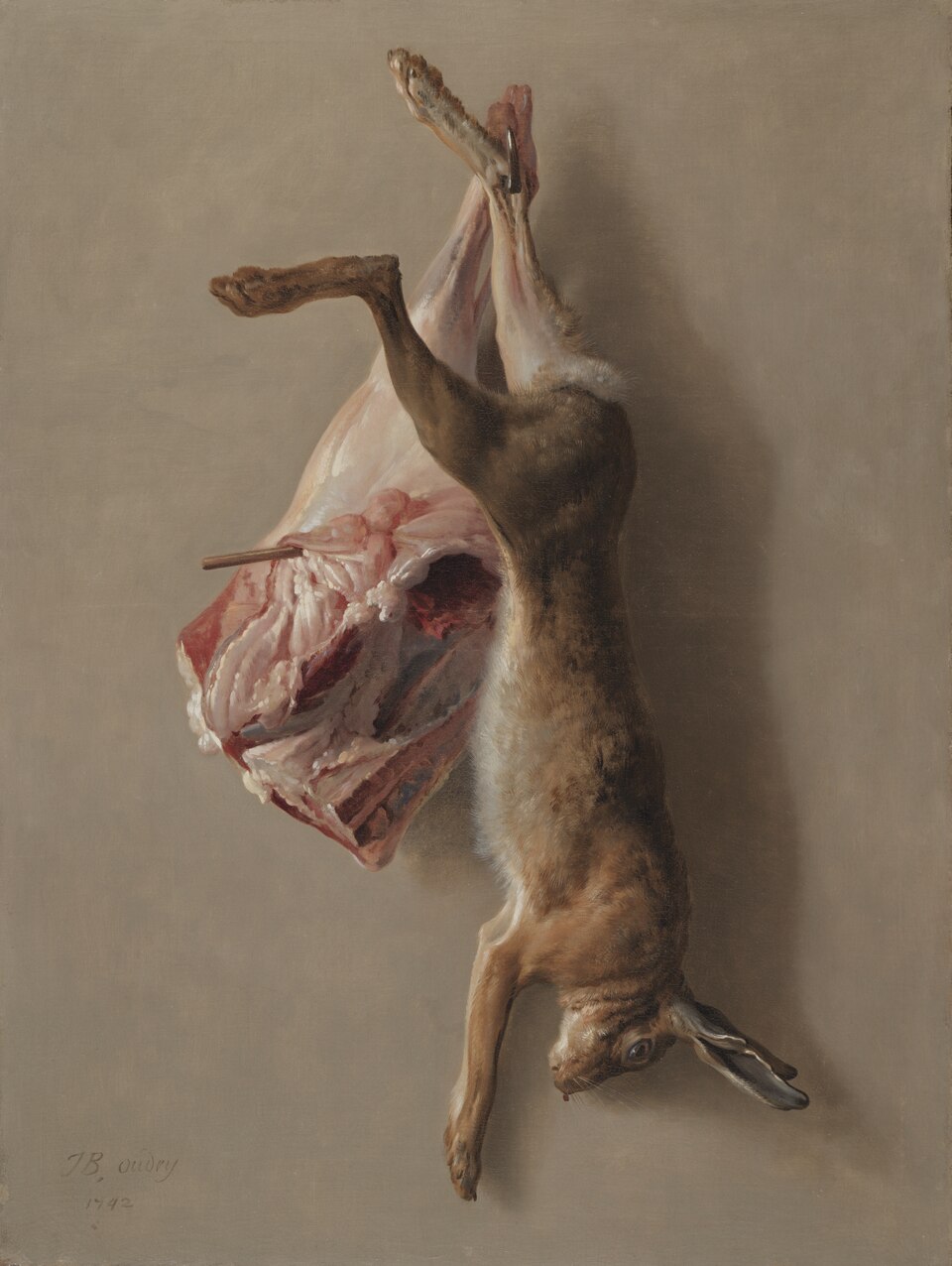
In the vibrant tapestry of 18th-century French art, few names shine as brightly in the realm of still life and animal painting as Jean-Baptiste Oudry. A master of the Rococo era, Oudry possessed an extraordinary talent for rendering the natural world with breathtaking realism. Among his celebrated works, the 1742 oil on canvas painting, A Hare and a Leg of Lamb, stands out not only for its technical brilliance but also for its fascinating historical and symbolic depth. At the heart of this masterpiece lies the meticulously depicted leg of lamb, an object transformed from a mere cut of meat into a powerful artistic statement through Oudry's masterful application of the trompe-l'œil technique.
Oudry (1686–1755) was revered for his ability to combine Rococo elegance with an almost scientific precision in his naturalism. His still lifes were far more than simple depictions; they were carefully composed narratives that invited viewers to marvel at the artist's skill and ponder deeper meanings. In A Hare and a Leg of Lamb, the skinned leg of lamb, alongside a dead hare, is depicted as if nailed to a wall, creating an illusion so convincing that it blurs the line between canvas and reality. This article delves into Oudry's ingenious approach, the symbolism embedded in the leg of lamb, and the painting's enduring legacy.
The Art of Deception: Oudry's Trompe-l'œil Technique
The term trompe-l'œil, French for "deceive the eye," perfectly encapsulates Oudry's ambition and achievement in this painting. This technique, aimed at creating an optical illusion that makes depicted objects appear three-dimensional and real, was highly prized among artists of the period. Oudry, with his keen observational skills and exquisite brushwork, elevated it to an art form that captivated his audience.
When examining the leg of lamb in Oudry's painting, the illusion is astonishing. The artist employs several key strategies to achieve this effect:
- Precise Rendering of Texture: Oudry meticulously captures the glistening, raw flesh of the skinned leg of lamb. You can almost feel the smooth, taut surface, the subtle marbling of fat, and the robust texture of the muscle tissue. The bone, stark white against the red meat, adds another layer of tactile realism.
- Illusion of Depth and Weight: The way the leg of lamb hangs, seemingly suspended by a nail, creates convincing shadows that suggest a real projection from the canvas. The naturalistic folds and contours imply its weight and three-dimensionality, making it appear to cast a shadow on the wall behind it.
- Strategic Composition: The starkly simple, sterile background serves a crucial purpose: it removes any distracting elements, forcing the viewer's gaze directly onto the subjects. This isolation enhances the trompe-l'œil effect, as there's nothing to betray the illusion of a tangible object against a flat plane.
- Meticulous Detail: From the faint veins visible beneath the surface to the subtle sheen on the flesh, Oudry's attention to minute details imbues the leg of lamb with an undeniable lifelike quality. It's this level of specificity that truly convinces the eye.
This mastery of textures and realism was particularly valued during the Enlightenment era, which championed scientific accuracy and empirical observation. Oudry's ability to render the visceral reality of a freshly prepared leg of lamb, down to its very fibers, was not merely decorative; it was a testament to his observational prowess, aligning art with the scientific spirit of the age. It's a skill that reminds us that truly great art often lies in the faithful, yet interpretive, capture of reality.
A Feast for the Eyes: The Symbolic Power of the Leg of Lamb
Beyond its technical brilliance, A Hare and a Leg of Lamb, and especially the prominently featured leg of lamb, carries significant symbolic weight. Created in 1742, just one year after a severe famine had struck France, the painting takes on a profound resonance. Far from being a mere depiction of foodstuffs, it serves as a lavish celebration of game and abundance.
The leg of lamb, a prized cut of meat, has historically been associated with feasts, prosperity, and hospitality. In the context of 18th-century France, where food security was often precarious for much of the population, a plentiful supply of such fare would have been a clear sign of wealth and success. The painting, therefore, was not just an aesthetic object but a statement—a visual affirmation of the rewards of the hunt and the bounty of the land. This symbolism made it an ideal piece for display in hunting lodges or the dining rooms of the aristocracy, places where the celebration of the hunt's spoils and the enjoyment of lavish meals were central to the lifestyle.
Consider the contrast between the wild hare, representing the thrill of the chase, and the skinned leg of lamb, meticulously prepared and ready for the culinary journey. The lamb signifies not just raw abundance, but abundance transformed into sustenance, civilization, and comfort. It speaks to the human capacity to tame nature and harvest its gifts. For more on this fascinating intersection of art, history, and social context, you might be interested in Oudry's A Hare and a Leg of Lamb: Art, Abundance, and Famine.
Moreover, the depiction of the leg of lamb can also be seen as an allegorical representation of life's fleeting pleasures and the cyclical nature of existence. While celebrating abundance, the dead game subtly reminds us of mortality and the ephemeral beauty of the natural world.
Oudry's Naturalism and the Rococo Spirit
Jean-Baptiste Oudry’s unique style often blended the decorative flourishes of the Rococo with a starkly realistic approach to his subjects. The Rococo movement, characterized by its ornate, playful, and often light-hearted aesthetic, might seem at odds with the grittier realism of a skinned leg of lamb. Yet, Oudry masterfully navigates this contrast. While the subject matter is undeniably naturalistic, the elegance of his execution and the refined composition elevate it beyond a simple butcher's shop scene.
His work reflects a broader artistic trend in the 18th century, where artists began to move away from purely mythological or historical narratives towards subjects that were more grounded in everyday life, albeit often glorified. Oudry’s focus on animals and still lifes, rendered with such precision, satisfied a growing appetite for art that connected with the tangible world. The stark background, rather than distracting, actually enhances the Rococo sensibility by allowing the objects themselves to become the focus of intricate visual study.
Oudry's paintings, including A Hare and a Leg of Lamb, served as testaments to his profound understanding of anatomy and form. His animal paintings were highly sought after, even influencing tapestry designs for the Gobelins and Beauvais manufactories. The meticulous rendering of the leg of lamb is a prime example of why Oudry was considered among the foremost animaliers and still-life painters of his time – his ability to capture the essence of life, even in death, was unparalleled.
Experiencing the "Leg of Lamb" Today: A Masterpiece's Journey
Today, Jean-Baptiste Oudry's A Hare and a Leg of Lamb is a treasured part of the collection at the Cleveland Museum of Art. Acquired in 1969 through the John L. Severance Fund, it now resides in Gallery 216B, dedicated to French and German art. Its journey from 18th-century French private collections—including sales at prestigious venues like Galerie Charpentier in 1958 and Palais Galliera in 1963—to its current American home underscores its enduring value and appeal across centuries and continents.
For visitors to the Cleveland Museum of Art, encountering this painting is an opportunity to engage directly with Oudry's genius. The museum's Open Access policy even allows for the free copying, modification, and distribution of the image, ensuring that this masterpiece continues to inspire and educate new generations.
When viewing the painting, consider these tips to fully appreciate its mastery:
- Step Back, Then Lean In: Initially, observe the painting from a distance to appreciate the full trompe-l'œil effect and the overall composition. Then, approach closer to marvel at the minute details – the individual strands of fur on the hare, the subtle texture of the bone, and the glistening quality of the leg of lamb's flesh.
- Imagine the Context: Picture this painting hanging in an opulent 18th-century dining room or a rustic hunting lodge. How would it have been perceived by guests who understood its dual message of artistic skill and material abundance, especially in the wake of famine?
- Reflect on the Symbolism: Beyond the initial shock of realism, ponder the deeper meanings embedded in the objects. What does the juxtaposition of wild game and prepared meat suggest about nature, culture, and human interaction with the environment?
Understanding the history and context behind such a work enriches the viewing experience significantly. For more on its historical placement and significance within the museum, explore Discovering Oudry's 18th-Century Still Life at Cleveland Museum.
Conclusion
Jean-Baptiste Oudry's A Hare and a Leg of Lamb is far more than a simple still life; it is a profound testament to an artist's skill, a historical artifact reflecting societal values, and a powerful visual illusion. Through his masterful trompe-l'œil technique, Oudry transforms a mere leg of lamb into an object of intense scrutiny and admiration, challenging viewers to question what is real and what is rendered. Its enduring presence in a major art institution today ensures that this 18th-century celebration of abundance and precise naturalism continues to captivate, educate, and inspire, reminding us of the timeless power of art to both deceive and delight the eye.
